
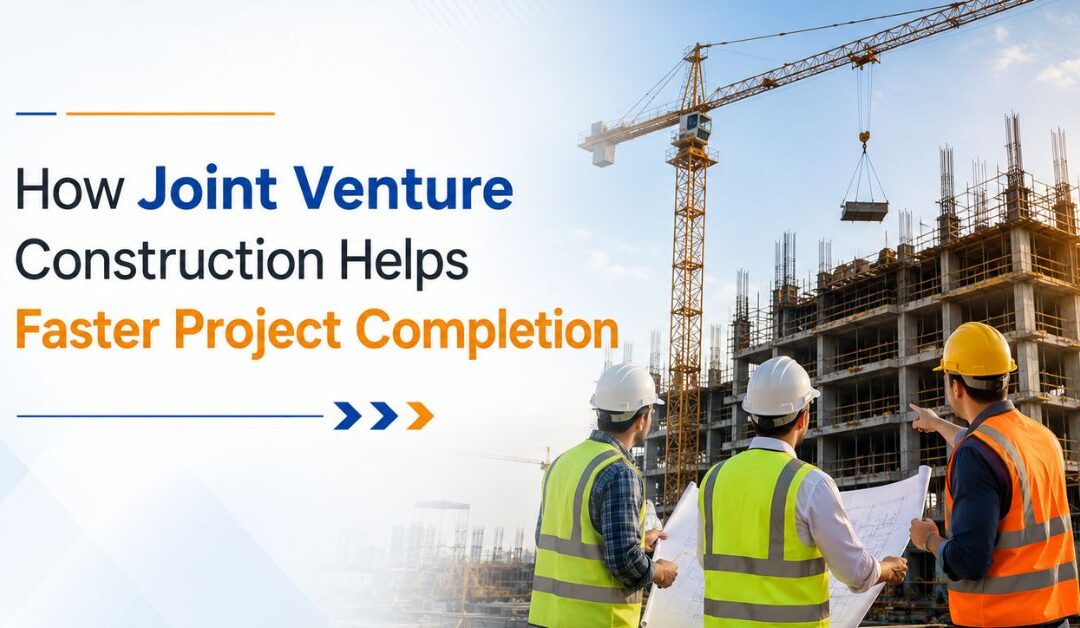
Real estate development has always been a race against time. Approvals drag. Funding stalls. Labour shortages slow things down. And all the while, construction costs keep climbing. So when a landowner and a builder decide to pool what they each do best, something shifts. Timelines tighten. Resources flow more freely. And projects that would have taken years start moving in months. That is the core promise of a construction joint venture, and it’s a promise Innovative Homes has been delivering on for over two decades as a trusted name for joint venture in Chennai.
What Makes a Joint Venture Different from a Standard Build?
In a typical construction setup, a developer buys land, arranges finance, hires contractors, and manages the entire project alone. Every bottleneck lands on one desk. A real estate joint venture splits that load differently: the landowner contributes the site, and the builder brings planning expertise, funding capacity, and on-ground execution. Each party plays to their strength from day one.
This is not just a financial arrangement. It’s a working structure that removes the gaps where delays usually hide.
Key Reasons Joint Ventures Speed Up Project Completion
1. The Land Is Already There
In most solo builds, months go into finding, negotiating, and verifying land before a single brick moves. In a Construction Joint Venture, that step is done before the agreement is signed. The builder steps in with a clear site and gets to work.
2. Both Sides Work at the Same Time
A joint venture doesn’t run in sequence. While the landowner handles local coordination and utility connections, the builder pushes design approvals and structural planning forward. Two workstreams running together means the calendar shrinks without anyone cutting corners.
3. Approvals Don’t Become a Waiting Game
Builders who have worked within Chennai’s CMDA and TNRERA systems know the paperwork, the sequence, and the people. In a Real Estate Joint Venture, that knowledge sits on the builder’s side. What takes a first-time developer six months to navigate gets handled in weeks.
4. Cash Flow Stays Stable
A funding gap in solo development stops everything. Labour, materials, and contractors all go on hold until the money sorts itself out. In a Construction Joint Venture, the builder carries construction costs while the landowner’s stake remains in the asset. Work keeps moving because one party’s liquidity problem doesn’t become the whole project’s problem.
5. The Team Is Ready on Day One
Innovative Homes doesn’t hire a team after signing. The project managers, architects, and contractors are already in place. No recruitment period, no onboarding lag. The day the agreement is finalised, work has somewhere to go immediately.
The Structure That Keeps Things Moving
A well-written joint venture agreement defines who decides what and by when. That clarity matters more than most people realise. Without it, every decision becomes a discussion. With it, approvals happen quickly because responsibilities are already assigned.
At Innovative Homes, the builder handles project execution, quality control, and all statutory approvals. The landowner stays involved in all major decisions without carrying the burden of daily site management. This division of responsibility isn’t just fair. It’s fast.
Why Chennai Makes This Model Work Even Better
Land in Virugambakkam, Adyar, and Anna Nagar doesn’t sit idle for long. Once it’s gone, it’s gone. A joint venture puts that land to work without the owner giving it up entirely. On top of that, Innovative Homes already has the vendor network, the trade contacts, and the supplier relationships built over decades in Chennai. That local footing alone takes months off a project that a new entrant would spend just getting set up.
What Landowners Should Expect from Timeline
A typical Real Estate Joint Venture project with a builder who knows the system can move from agreement to foundation within three to four months. Compared to a landowner managing independently, often looking at six to twelve months before construction even begins, that difference is significant.
Here’s a rough timeline breakdown:
- Month 1–2: Agreement finalisation, legal verification, architect briefing
- Month 2–3: Plan submission and CMDA/TNRERA approvals
- Month 3–4: Site preparation and foundation work begins
- Month 4 onward: Structured construction in phases with quality checks at each floor
The speed comes not from rushing work but from removing idle time between steps.
Joint Venture vs. Going Alone: An Honest Comparison
| Factor | Solo Development | Construction Joint Venture |
| Land-to-foundation timeline | 6–12 months | 3–4 months |
| Approval handling | Owner’s responsibility | Builder manages |
| Funding gaps | Common delay point | Shared, more stable |
| Quality control | Depends on hired help | Builder’s in-house team |
| Risk spread | Single party bears all | Shared between partners |
The numbers make the case clearly. A Construction Joint Venture isn’t just faster. It distributes risk and puts professionals in charge of the parts they know best.
Why Innovative Homes
With 30 years in civil engineering, Mr. M. A. Annamalai built Innovative Homes on one principle: deliver what you promise. Over 2,00,000 sq ft constructed. More than 350 homeowners across South Chennai. In every Real Estate Joint Venture, landowners know what’s happening at each stage, no chasing, no guesswork. That track record is what makes the difference when you’re handing over your land to a builder.
If your land is sitting idle, waiting for the right moment or the right partner, that moment may already be here. Reach out to Innovative Homes and find out how a joint venture can turn your plot into a finished project, faster than you’d expect.