
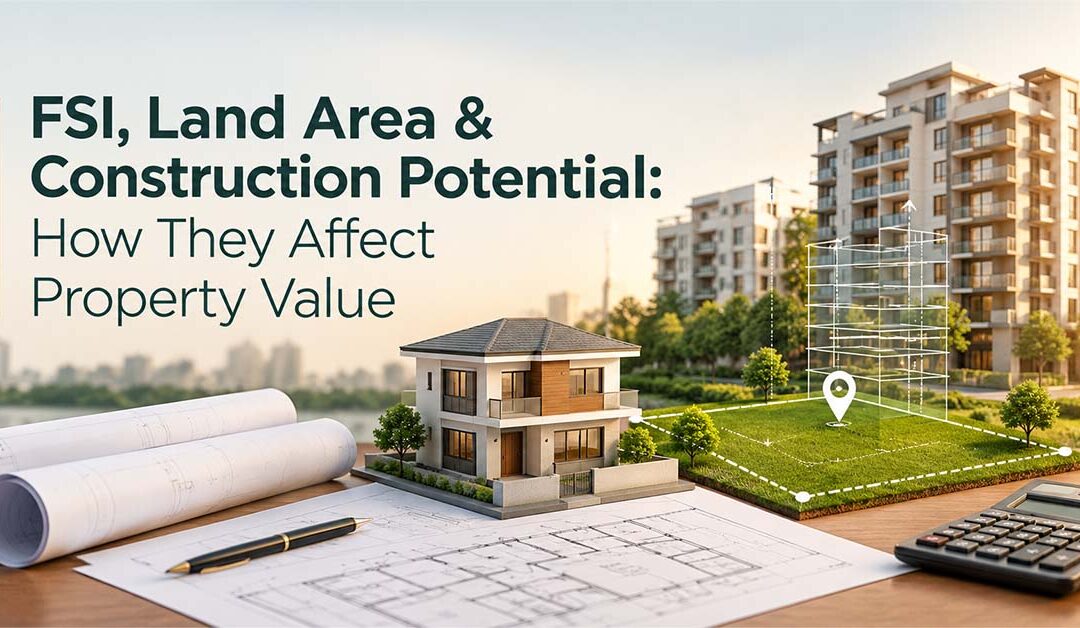
Two plots sit side by side in the same Chennai neighbourhood, nearly identical in size, yet one sells for considerably more than the other. The buyer walking away confused usually hasn’t looked past the surface, the actual difference often has nothing to do with location or road width, and everything to do with a number most people never think to ask about: how much can legally be built on that land.
FSI, or Floor Space Index, quietly shapes property value in a way far more decisive than most buyers realise, and understanding it changes how a plot, a resale flat, or even a joint venture construction in Chennai opportunity should actually be evaluated.
What FSI Actually Means
Floor Space Index, sometimes called Floor Area Ratio, is the ratio between the total built-up area permitted on a plot and the actual size of that plot. An FSI of 1.5 on a 2,000 square foot plot, for instance, allows up to 3,000 square feet of total construction across all floors combined.
This single number, set by local development authorities and varying by zone, road width, and land use classification, determines how much a builder can actually construct, and by extension, how much revenue that land can eventually generate once developed.
Why FSI Matters More Than Raw Land Size
A larger plot with a low FSI can allow less construction than a smaller plot in a zone with a higher permitted ratio. This is precisely why two similarly sized plots in different parts of the same city can carry very different price tags, the land itself isn’t what’s being valued most, it’s the construction potential sitting on top of it.
Some of the key factors affecting FSI allocation are:
- Zoning classification – residential, commercial or mixed-use zoning have different permitted ratios
- Road width in front of the property – generally, wider roads allow for higher FSI due to better infrastructure capacity
- Proximity to metro corridors or designated growth zones – certain zones may also be eligible for additional FSI incentives
- Local development authority regulations – these tend to vary from one part of a city to another
How FSI Directly Shapes Property Value
More FSI means more salable or rentable space from the same plot. A developer can generate more revenue from the same plot without having to buy additional land, this directly increases what a plot is worth on the open market, sometimes even more than the location itself.
For landowners exploring options like a joint venture rather than an outright sale, this becomes especially relevant. A plot with strong FSI potential often makes a joint venture arrangement considerably more attractive, since the builder can construct more saleable units from the same parcel, improving the value split for both parties involved.
Land Area: More Than Size
In terms of how much can be built, FSI is certainly a major factor, but the shape, dimensions and usability of the land itself still matter a great deal. A plot with an awkward shape or an excessive ratio of frontage to depth, or with irregular boundaries, can lose usable construction area even with a generous FSI allowance, simply because certain configurations do not convert into buildable floor plans efficiently.
Setback requirements also eat into usable land area. In reality, local codes often require minimum setbacks from property lines before anything can be built, which shrinks the buildable footprint no matter what the FSI allows on paper.
Construction Potential and Long-Term Value
Construction potential is more than what you can build today. It’s what a property can sustain in the years to come as regulations and infrastructure evolve. Areas seeing metro expansion, road widening, or rezoning toward higher-density use often see FSI allowances increase over time, which retroactively boosts the value of land already held in that zone.
This is part of why experienced developers evaluate land not purely on current market price, but on its trajectory, what the FSI and zoning classification suggest about future construction potential as the surrounding area continues to develop.
What This Means for Buyers and Landowners
For flat buyers, FSI mostly shows up indirectly, through unit density, building height, and how much open space a project retains around the structure. Developments built on land with generous FSI sometimes pack in more units, which can affect everything from parking availability to how crowded common amenities feel day to day.
For landowners, particularly those weighing a sale against a joint venture, understanding FSI is not optional. It directly determines how much a builder can realistically construct, which shapes the entire value proposition of any development partnership.
Why This Matters When Comparing Options in Tambaram
Tambaram’s construction landscape reflects these dynamics clearly, plots along wider corridors with better zoning classifications tend to support denser, more valuable development than comparable land tucked into narrower residential lanes. Buyers evaluating flats for sale in Tambaram are, in a sense, indirectly benefiting from the FSI decisions that shaped how much could be built on the land their unit now sits on.
Getting the Full Picture Before Committing
Innovative Homes has been building in and around Chennai for over 25 years, with more than 200,000 square feet of completed construction and close to 350 satisfied homeowners across their projects, experience that extends directly into evaluating land and construction potential before any joint venture or development decision is made.
FSI, land area, and construction potential rarely get explained clearly to buyers or landowners before a decision is made, yet together they explain far more about property value than location or square footage alone ever could. Whether evaluating a flat purchase or considering a joint venture on owned land, understanding these fundamentals turns a surface-level comparison into a properly informed decision.