
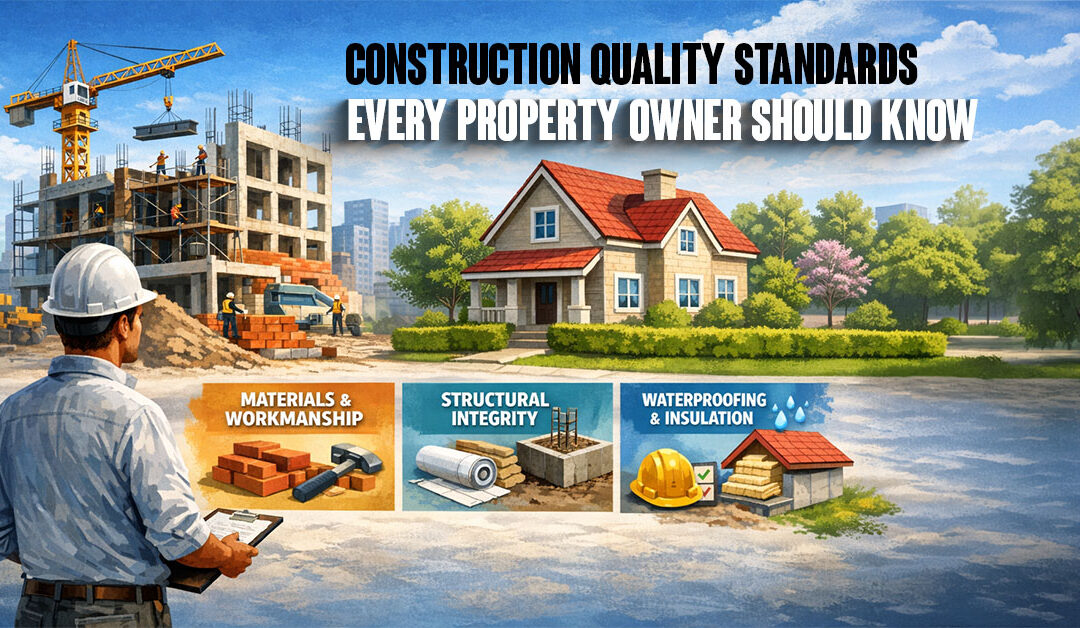
A lot of property owners get distracted by the marble flooring and the premium fittings, but a home is only as good as what is hidden behind the plaster. In the landscape of Joint Venture Construction in Chennai, the stakes are even higher because you aren’t just buying a unit; you are trusting a partner with your land. Quality isn’t a vague promise or a marketing tagline. It is a measurable set of standards that determines if your building survives a decade of coastal humidity or starts crumbling after the first heavy monsoon.
The Foundation and Soil: The Invisible Risk
Building starts in the dirt, long before the first pillar rises. If you are drafting a construction quality checklist, soil testing is the non-negotiable first entry. Chennai’s geography is tricky; a plot in OMR might sit on heavy clay or soft sludge, requiring pile foundations that go deep enough to hit stable strata. Ignoring this leads to uneven settlement, where the building literally sinks into itself, creating structural cracks that no amount of expensive paint can hide.
Adhering to strict construction quality standards also means looking at the plinth level. In a city prone to sudden, heavy flooding, your ground floor must sit comfortably above the projected road height of the next decade. If the builder skimps on foundation height to save on material costs, your “dream home” becomes a reservoir during the first monsoon. Cutting corners here isn’t a saving; it is a long-term liability that compromises the entire skeleton of the property.
Concrete and Steel: The Chemistry of Strength
Concrete is the muscle of your home, and steel is its spine. To meet high building quality standards, the mix ratio must be precise. For most residential slabs, an M20 grade is the baseline, requiring a 1:1.5:3 ratio of cement, sand, and aggregate. If the mix is too watery or lean, the structural integrity drops instantly. However, the chemistry doesn’t end at the pour. Curing the process of keeping the concrete wet for at least 21 days is the most frequently ignored step on local sites. Without proper hydration, concrete develops micro-cracks that later manifest as stubborn ceiling seepage and weakened slabs.
In Chennai’s salt-heavy air, the choice of steel is a matter of survival. You should see TMT bars (IS 1786) on-site. These bars have a tough outer core and a ductile inner, preventing the “cancer” of rust from expanding inside your beams. If the steel corrodes, it expands, causing the concrete to spall and fall off. It’s a messy, expensive failure that happens when a builder prioritizes a cheaper quote over the right metallurgical grade.
Wall Integrity and Plastering
Walls do more than just divide rooms; they manage the load and provide the base for every finish in the house. You can spot a lack of construction quality standards by looking at the mortar joints. A simple “key test” tells the story: if you can easily scrape away the mortar between bricks with a house key, the sand-to-cement ratio is too high, and the wall is weak.
The plastering stage is where builders often hide poor workmanship. Walk through the site and tap the walls with your knuckles. A hollow, drum-like sound indicates air pockets where the plaster hasn’t bonded to the brickwork, leading to inevitable peeling and dampness later. Finally, check the alignment. A wall that isn’t perfectly vertical, as verified easily with a plumb bob, puts uneven pressure on the floor beams. It isn’t just an aesthetic flaw; it’s a structural error that complicates every door and window installation that follows.
MEP: The Nervous System
Mechanical, electrical, and plumbing (MEP) systems are the most common sources of post-handover headaches. If your construction quality checklist doesn’t include a pressure test for plumbing, you’re asking for trouble. In modern construction quality standards, UPVC and CPVC pipes have replaced old GI pipes because they don’t rust or scale, ensuring clean water flow for decades. Before the floors are finalized, run a high-volume water test in bathrooms. If a bucket of water doesn’t drain instantly, the slope is wrong, and you’ll be fighting stagnant water and odors forever.
On the electrical side, the distribution board reveals the builder’s discipline. Wiring should never look like a “rat’s nest” of tangled colors. Every circuit must be labeled, and all wires must carry the ISI mark to handle the load of modern appliances without melting. If the wiring is messy, the builder is likely cutting corners elsewhere.
Waterproofing: The Ultimate Chennai Test
In Chennai, water is a relentless invader. Adhering to strict building quality standards means installing a Damp Proof Course (DPC) at the plinth level. This horizontal barrier is the only thing stopping groundwater from wicking up into your walls and ruining your expensive interiors. On the terrace, precision is everything. Most seepage issues start with a 1-degree error in grading that allows water to stagnate. If the slope doesn’t direct water to the rain pipes immediately, the slab will eventually leak. Fixing these failures post-construction costs five times more than doing it right during the initial build.
Closing: The Handover Reality
Handover day is the point where legal responsibility becomes clear. From the date of possession, Section 14(3) of the RERA Act holds the builder accountable for structural and workmanship defects for the next five years. This “Defect Liability Period” is your primary protection against latent flaws that only reveal themselves after a full seasonal cycle. Whether you are moving into a private bungalow or looking at new Flats for Sale in Virugambakkam, you must verify that the construction matches the approved plans before signing the possession letter.
Don’t just take the keys; take the test reports. Demand copies of the soil test, the cube test results for concrete strength, and the warranty certificates for internal waterproofing. These documents are your evidence if you ever need to file a claim. A professional handover ensures that your investment stays an asset rather than becoming a repair project.